
Annaprashan silver gifts. Blessings for a first taste.
A puja thaal for the ceremony, a Ganesha Shankh for blessings, a Kamal Bowl for the rice offering. The first rice ceremony deserves pieces that carry meaning — silver-plated heirlooms handcrafted in our Delhi NCR studio, plus larger idols for families who want something larger.
Why silver for the first feed.
Annaprashan is one of the sixteen Hindu samskaras — life rituals that shape a person from conception to cremation. It falls between namakarana (naming, in the first month) and chudakarana (the first haircut, around age three). The samskara's purpose is to bless the baby's transition from milk to grain — a transition that Ayurveda considers the first major shift in the constitution. Silver is chosen because it is anti-microbial, cool to the touch, and culturally read as the metal of purity. In the south, the family sometimes places a tray with a pen, a coin and a clay lump in front of the baby after the feed — the object the baby reaches for is read as the first hint of vocation.
Grain
Anna is rice specifically — the cooked grain that became the original food of householders. In Vedic thought, anna is the body itself: annam brahma, the food is the divine.
First taste
Prashan means a first sip or first taste, distinct from a regular meal. The ceremony marks the baby's introduction to anna — typically a small spoon of payesh or kheer, fed by the maternal uncle.
Rice in the mouth
The Bengali name — literally rice in the mouth — preserves the most physical part of the ritual. In Bengali tradition the baby is offered five tastes: sweet, sour, salty, bitter, pungent.
Four pieces for the first rice ceremony.
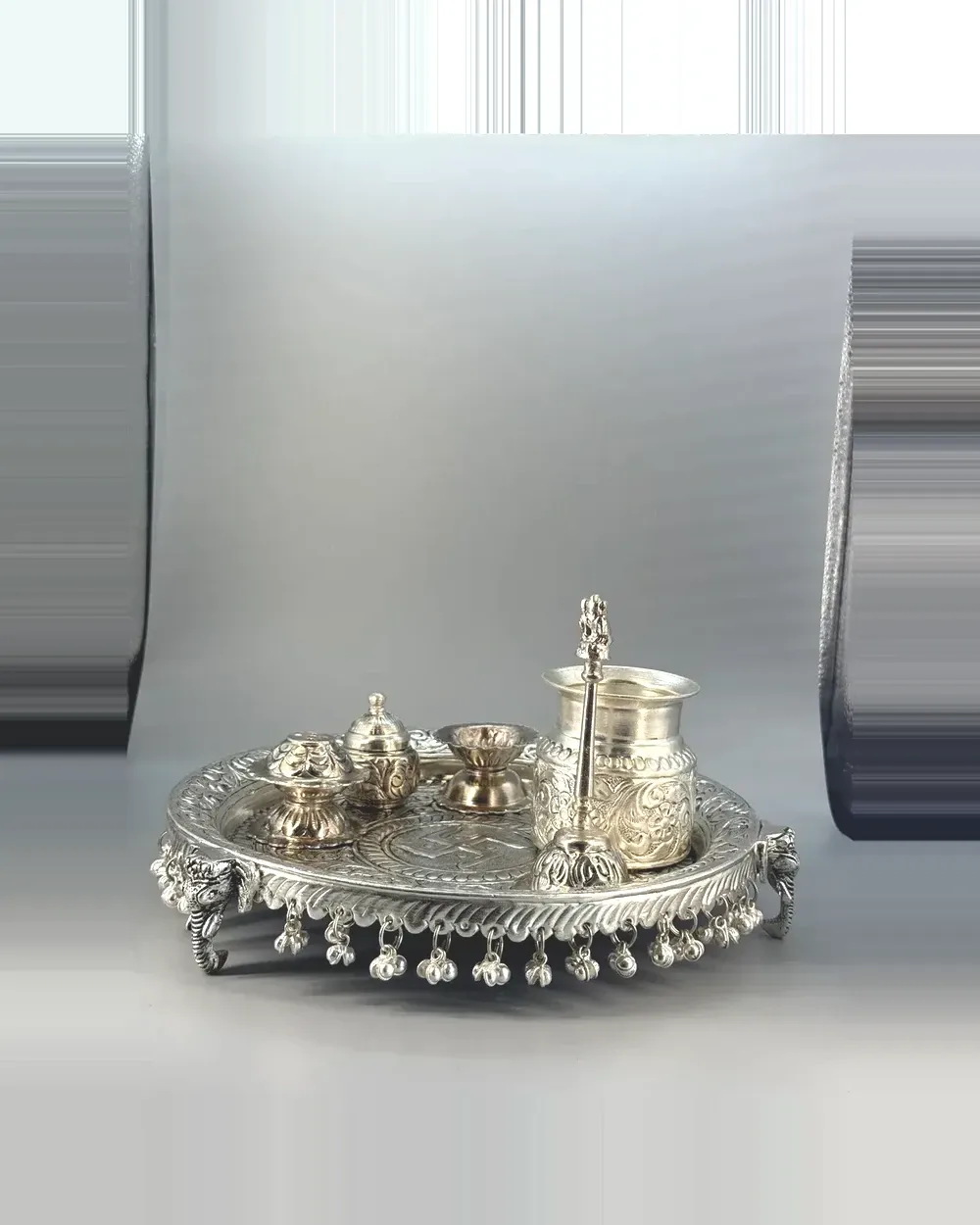
Shraddha Puja Thaal
Silver-plated puja thaal that holds the rice, ghee and offerings during the annaprashan mantras. After the ceremony, it becomes the family's everyday puja thaal — a piece used at every festival going forward.
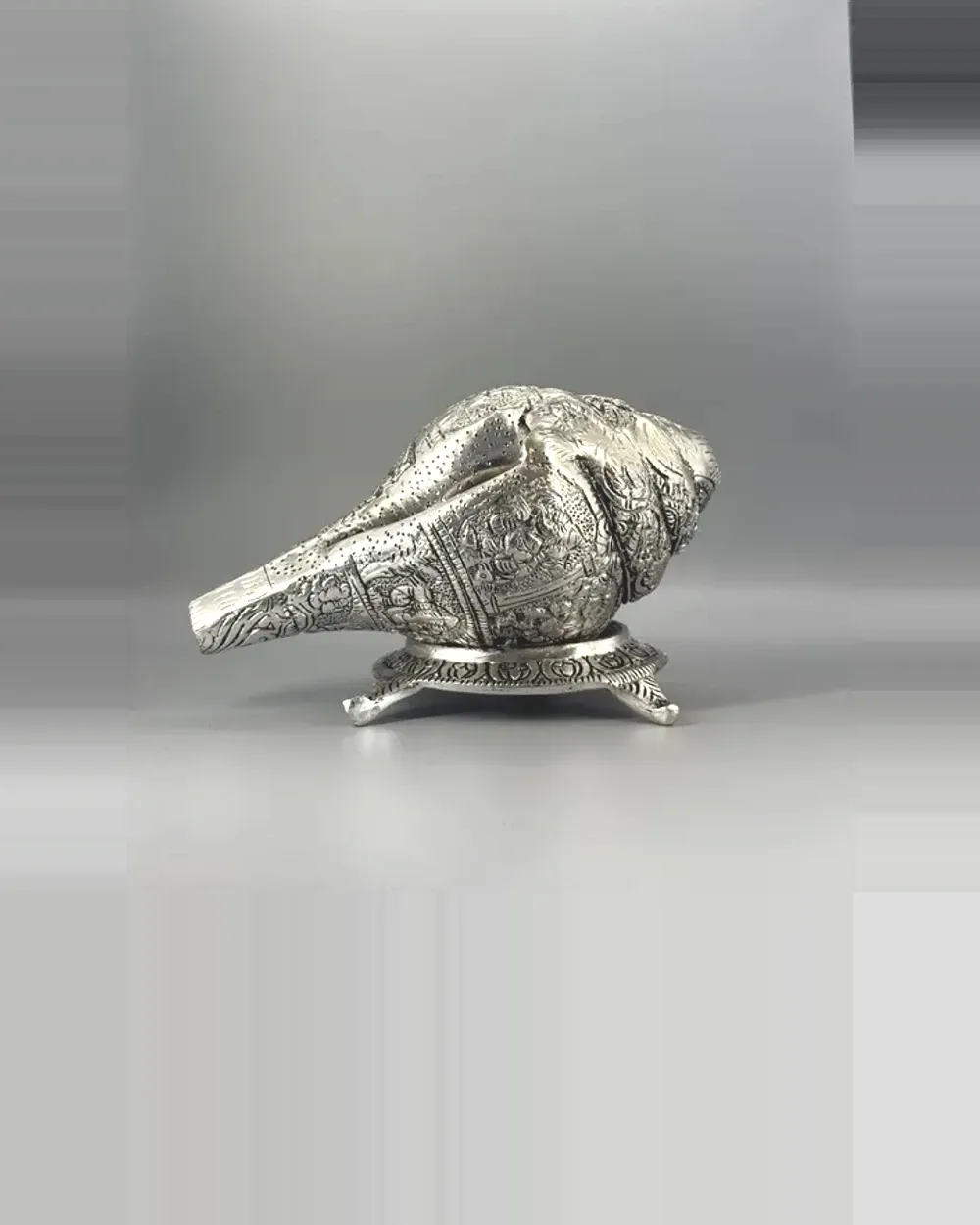
Ganesha Shankh with Stand
Silver-plated conch with Ganesha relief, mounted on a stand. Blown at the start of the puja to invoke Ganesh's blessings for the baby's first grain. A ceremonial piece that anchors the mandir shelf after the day.
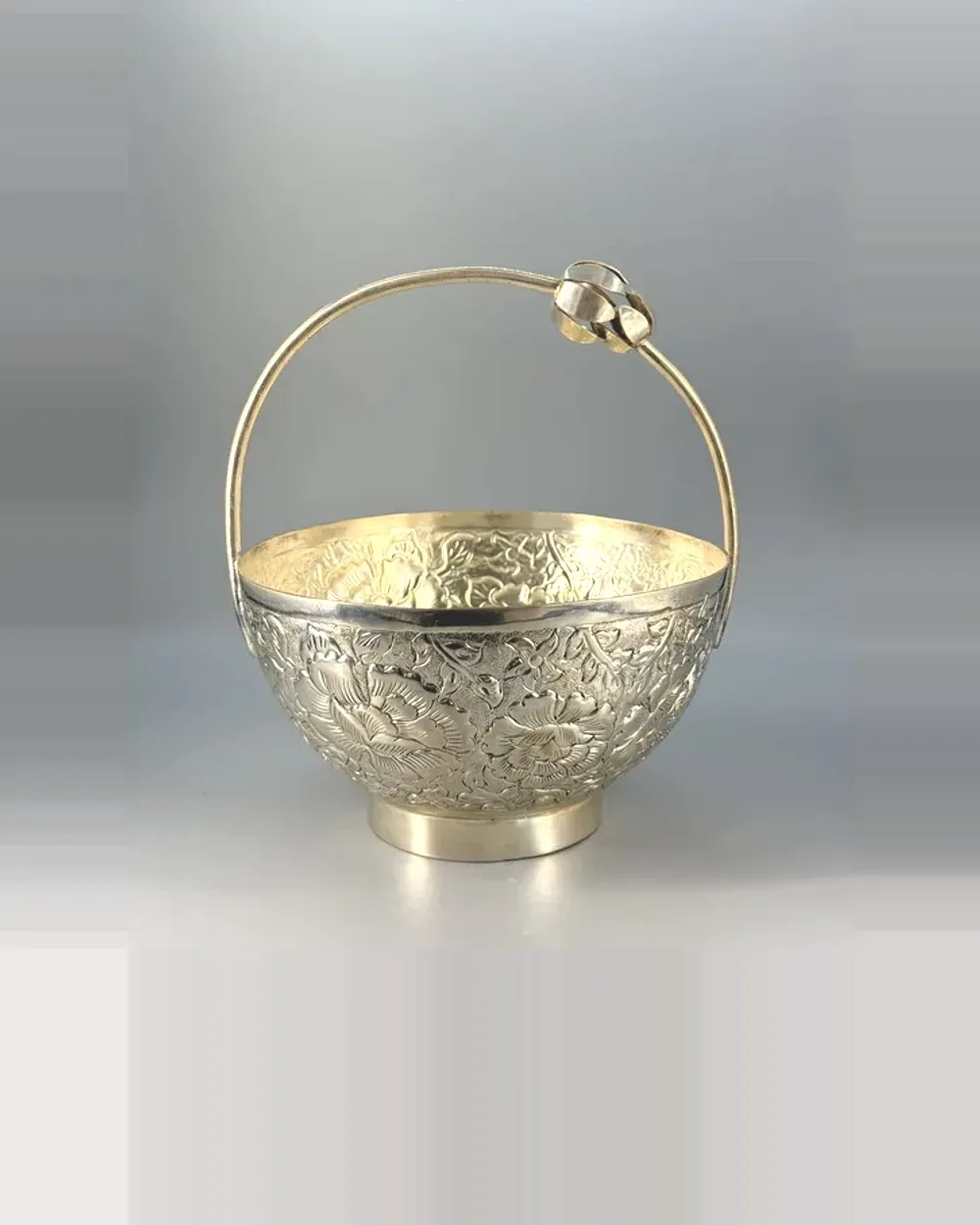
Kamal Bowl
Lotus-shaped silver-plated bowl — the perfect vessel for the baby's first rice or payesh offering. Its petal form echoes the auspiciousness of the lotus in the ceremony. Doubles as a decorative piece year-round.
Ganesha Shankh with Stand
Silver-plated Ganesha idol from our statement pieces — the ultimate annaprashan blessing piece. Hand-finished, weighty in the palm, made to be passed from one generation's ceremony to the next.
Pieces for the ceremony.
Each piece plays a role in the annaprashan puja — from the thaal that holds the offerings to the Ganesha Shankh that starts the ceremony. Silver-plated pieces start from ₹1,500; larger idols are priced on request.
Shraddha Puja Thaal · ceremony centrepiece · everyday puja use
Ganesha Shankh with Stand · blessing conch · mandir shelf
Lotus-shaped bowl · rice or payesh offering vessel
larger idol · heirloom blessing piece
From bath to first spoon.
Bath & dress
The baby is bathed and dressed in new clothes — typically yellow or red. Tilak is applied. The mama (maternal uncle) arrives with the silver gifts — the Ganesha Shankh, the puja thaal, the Kamal Bowl.
Family puja
Brief Ganesh puja and a Saraswati invocation. The Shraddha Puja Thaal holds rice, ghee and sugar for the offering. The priest reads the annaprashan mantra; family elders bless the baby.
First spoon
The maternal uncle (or father, in some traditions) offers the first taste of payesh — sweetened rice cooked in milk — from the Kamal Bowl. The baby's reaction is photographed. Five tastes follow in Bengali tradition.
Gifting & meal
Guests offer the baby silver gifts — Musical Ganeshas, a Kamdhenu Cow for abundance, a Nimbu Mirchi for protection. The family meal follows — typically the same payesh, rice, dal, and a sweet. The silver pieces join the family mandir.
Silver that outlasts the ceremony.
Regular care
Wipe silver-plated pieces with a soft, dry cotton cloth after each use. For the Puja Thaal and Kamal Bowl, remove any food residue promptly with mild soap and warm water. Dry immediately — don't air-dry.
Shankh & idols
The Ganesha Shankh with Stand and any larger idols need only a gentle wipe with a silver cloth once a month. Avoid abrasive polishes on plated surfaces. For heavier pieces, a specialist silver polish can restore the finish.
What to avoid
Never use bleach, lemon, or chlorinated cleaners on silver-plated pieces. Don't store in humid areas — moisture is the main cause of tarnish. Keep away from camphor and rubber during storage.
Annaprashan silver, answered.
What is the most appropriate annaprashan silver gift?
The most meaningful gifts are ceremonial pieces used during the puja itself — the Shraddha Puja Thaal to hold the rice offering, a Ganesha Shankh with Stand for blessings, and a Kamal Bowl as an elegant vessel for the baby's first rice or payesh.
Why silver for a baby's first rice ceremony?
Silver is the auspicious metal associated with purity and the moon in Vedic tradition. Ayurveda considers silver cooling and purifying — making it the ideal material for the ceremony that marks a baby's transition from milk to grain. Silver-plated pieces are treasured as heirlooms.
At what age does annaprashan happen?
Annaprashan typically takes place between 6 and 8 months, on a date chosen by the family priest. The Bengali tradition calls it mukhe bhaat. In South India it's sometimes combined with the choroonu ceremony at the family temple.
Which Nazarana pieces work best for the ceremony itself?
The Shraddha Puja Thaal is the centrepiece — it holds the rice, ghee and offerings during the priest's mantras. The Bhog Leaf Platter is used for the prasad offering. A Ganesha Shankh with Stand invokes Ganesh's blessings at the start of the puja.
How is this different from a christening or naming-day gift?
Annaprashan marks the first solid food, not the name (the namkaran ceremony happens earlier). The focus is on pieces that frame the ceremony — a puja thaal, a blessing idol, a platter for the rice offering — rather than purely decorative items.
What about a larger heirloom piece for annaprashan?
For families who want a true heirloom, our statement pieces Ganesha idol or Tirupati Balaji Idol makes a stunning blessing piece for the ceremony. These are silver-plated and priced on request. Enquire on WhatsApp for availability.