
Issue 16 · Summer 2026Series · Buying Silver
NThe Journal
Pricing6 minute read · 1,520 words
मूल्य · On weight & pricing

Silver weight & pricing, decoded.

How silver is actually priced in India — the ₹/gram spot rate, making charges, the 3% GST line, and the small premiums that quietly add up. A worked example for a 50-gram silver coin, with the bill broken open.

Paridhi Negi · Founder
18 May 2026
Macro · weighing scale displaying 50.00g · silver coin alongside · ruled pricing notebook

01 · The four lines on the bill

What you are actually paying for.

A silver bill from a reputable Indian studio has exactly four lines, in this order. (1) Silver weight, in grams, net of packaging. (2) The day's ₹/gram spot rate, sourced from the IBJA published list. (3) Making charges, expressed either as a per-piece figure or as a percentage of metal value. (4) The 3% GST line, calculated on lines (1) + (3) combined. Anything beyond these four lines is opaque pricing and should be questioned at the counter.

The bill we issue at Nazarana follows exactly this template. The weight is verified on a 0.01g jeweller's scale and stamped on the certificate. The spot rate matches the IBJA morning publication. Making charges are itemised by piece. The GST line is calculated transparently. The final figure is what you pay; there are no further markups.

The reason for laying out the bill this way is not regulatory (the GST regime requires only the GST line). The reason is cultural: the customer who is buying silver as streedhan or as a Dhanteras coin is buying weight, not jewellery. The bill should reflect that. The customer should be able to point at any line and know exactly what it covers.

  • Line 1 · WeightNet grams of silver, verified on jeweller's scale, packaging excluded
  • Line 2 · Spot rateDay's IBJA ₹/gram rate for the relevant fineness (999, 925, etc.)
  • Line 3 · MakingPer-piece or % of metal value, itemised by piece
  • Line 4 · GST3% on (weight × rate + making), itemised on the invoice

02 · The IBJA spot rate

Where the per-gram number comes from.

The India Bullion and Jewellers Association publishes the official Indian silver spot rate twice a day at 11 AM and 5 PM. The rate is derived from the international London Bullion Market Association (LBMA) silver fix, converted to INR at the prevailing exchange rate, and adjusted for the 7.5% Indian import duty plus a small dealer premium. Every BIS-registered jeweller in India uses this rate as the basis for pricing.

As of mid-2026, the IBJA 999 silver rate sits at approximately ₹114 per gram. The 925 sterling rate is roughly 6% lower because the metal is 92.5% silver by mass. A 100g 999 silver bar carries a metal value of ₹11,400; the same 100g in 925 sterling carries ₹10,700 of metal value.

The rate moves daily. A 1–2% movement is normal; a 5% movement in a single session is unusual but happens during major macro events. Reputable studios lock the customer's quoted rate for 14 days from the date of quote — this gives the buyer time to confirm without being whipsawed by the metal's volatility.
Transparent pricing · Catalogue

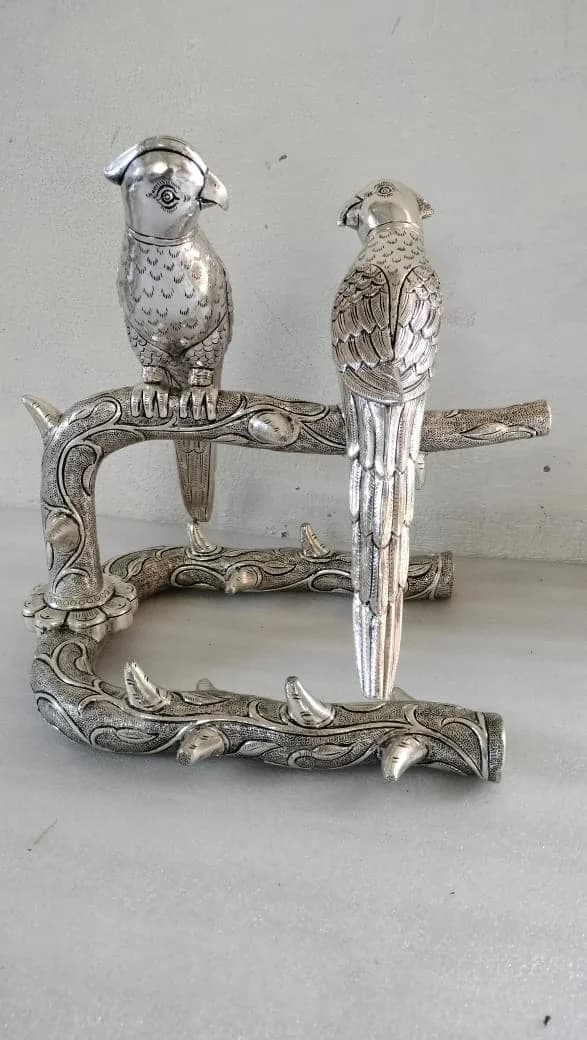
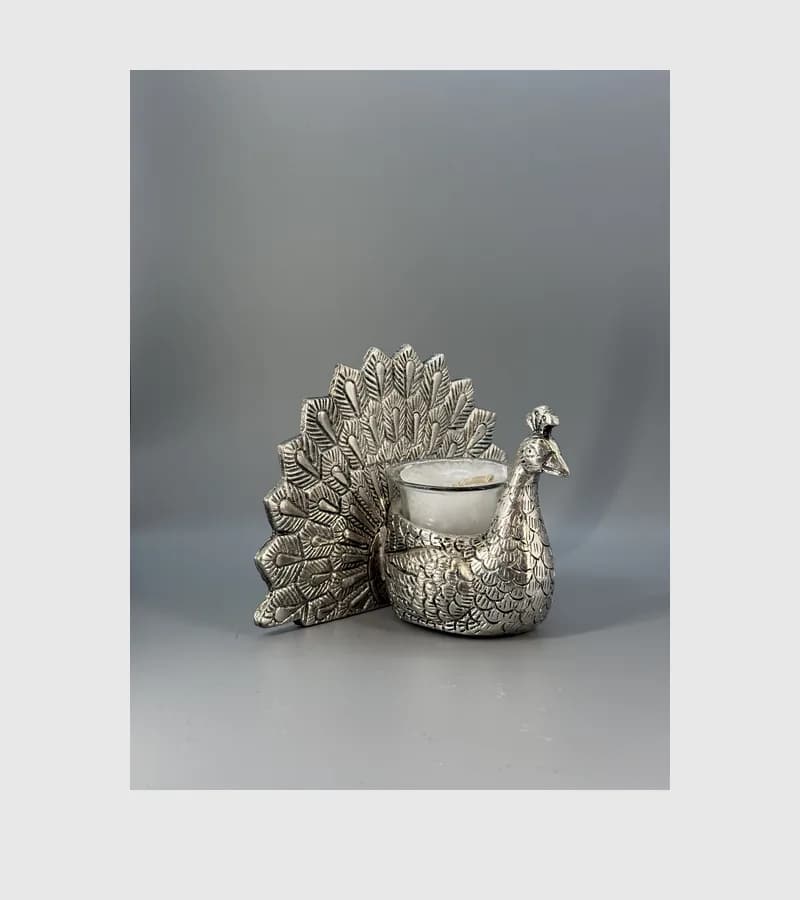
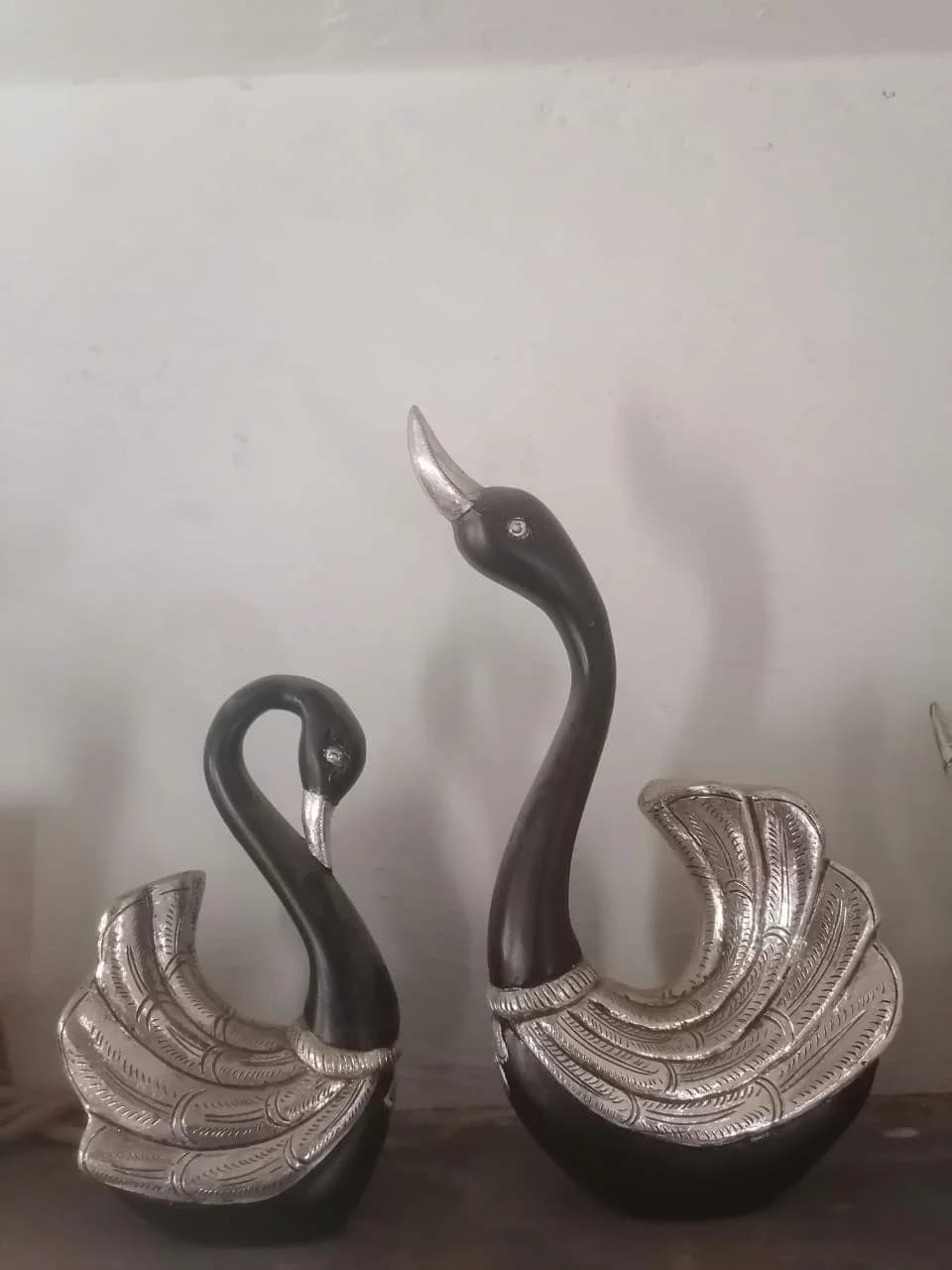
Every piece on our catalogue ships with the four-line bill — weight, rate, making, GST.

The PDF catalogue lists weight bands and indicative prices. The exact bill is locked at the day's IBJA rate when you confirm.

Download the catalogue

03 · Worked example · 50g coin

The bill broken open, line by line.

Take a 50g 999 silver coin, hand-pressed with a Lakshmi obverse and the customer's family monogram on the reverse. The bill reads as follows.

Line 1: Silver weight, 50.00g. Verified on the studio's 0.01g jeweller's scale. Packaging (velvet pouch, presentation box) is excluded from the weight figure.

Line 2: Spot rate, ₹114 per gram (IBJA 999 morning fix). Metal value: 50 × 114 = ₹5,700.

Line 3: Making charges, ₹450 for a hand-pressed coin with custom reverse engraving. This covers the die preparation, the press operation, and the hand-finishing of the rim. For a plain-reverse coin without engraving, making would be ₹250.

Line 4: GST, 3% on (₹5,700 + ₹450) = ₹184.50.

Final price: ₹5,700 + ₹450 + ₹184.50 = ₹6,334.50. Rounded to ₹6,335 on the invoice. Velvet pouch and BIS hallmark certificate included at no extra cost.

The customer who is buying silver as streedhan is buying weight, not jewellery. The bill should reflect that.

04 · Where pricing goes opaque

Five red flags to watch for at the counter.

The honest silver bill is the four-line bill above. The opaque silver bill hides costs in places where the customer can't easily question them. Five red flags worth knowing.

(1) No itemised weight. If the bill quotes a final price without breaking out the gram weight, the customer cannot independently verify the metal value. Ask for the weight, on the bill, before paying.

(2) Making charges as a percentage on top of GST. The 3% GST should be calculated on metal + making combined, not on metal alone with making added afterwards. The opaque version adds 2–3% to the final price quietly.

(3) Packaging weight included in silver weight. Packaging (pouches, boxes) should be excluded from the gram figure. Some retailers quietly include the velvet pouch weight in the silver figure and bill metal-rate against it.

(4) Stale spot rate. The IBJA rate is published twice daily. A studio still quoting last week's rate is either disorganised or is using the lower rate to undercut competitors — the customer will discover the discrepancy at delivery.

(5) No BIS hallmark certificate. If the piece doesn't ship with a paper or digital hallmark certificate, the customer has no way to verify the fineness claimed on the bill. The certificate is non-negotiable for any piece over 2 grams.

End of piece
1,520 words · 6 minutes
~
Author

Paridhi Negi

Founder, Nazarana Silver. Trained in product design at NID. Writes a few times a year — on silver, ceremony, and the difference between a souvenir and a gift.

Read more by Paridhi
The Journal · four issues a year

Get a four-line quote for the piece you have in mind.

WhatsApp the founderSee Luxe 999 collection